4 days

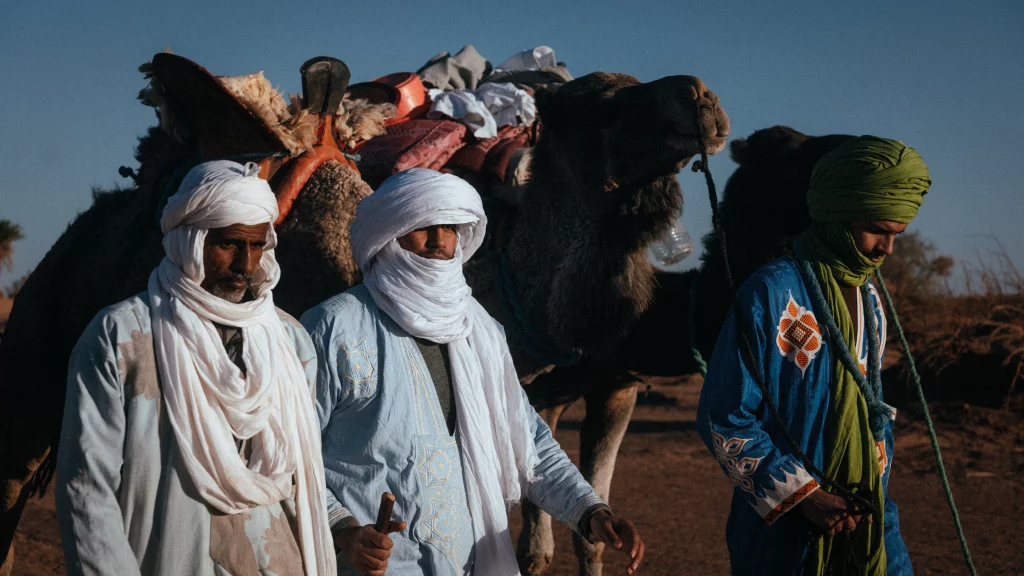
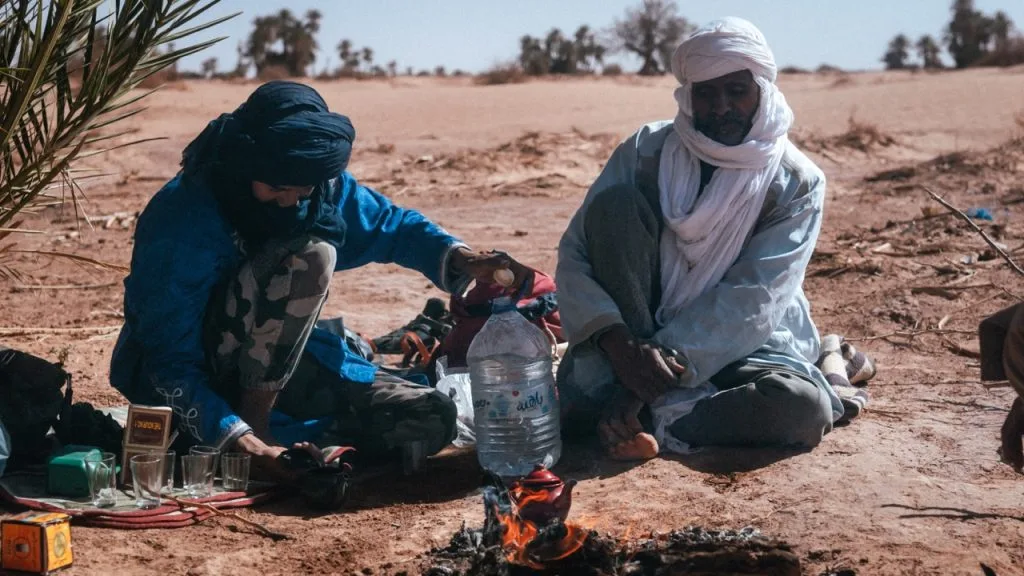
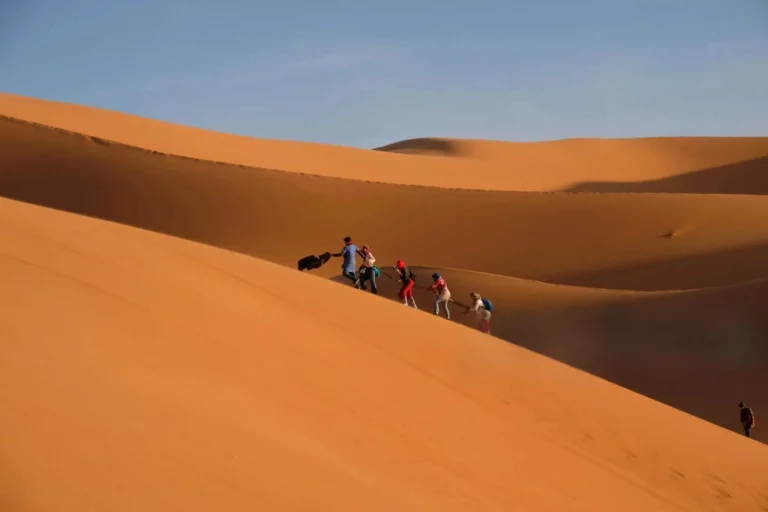
The difference appears when the road ends. You stop watching the Sahara through a window and begin noticing it under your feet: firm ground beside the Drâa, soft sand on a dune shoulder, a patch of tamarisk shade where the team pauses for lunch. This five-day Morocco desert trek follows a walking circuit from M’Hamid to Sidi Naji, Erg Zahar and Erg Bourabara, supported by a local desert team and baggage camels.
You spend the first night at a fixed camp near M’Hamid, then three nights at moving camps along the route. Days two to five are walking stages; the fifth combines the final walk with your onward transfer. This is a five-day journey, rather than five full days of walking. That distinction matters when you plan flights and compare trekking holidays.
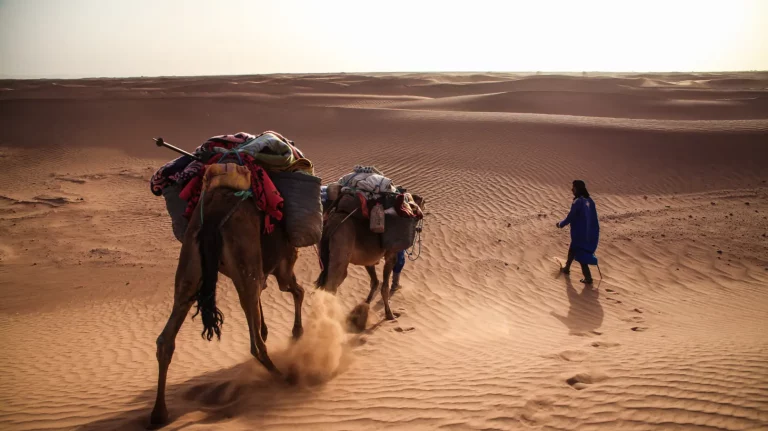
Camels carry the main bags and camp equipment, so you walk with a daypack. Their role is support: this itinerary does not promise a riding camel for every guest. The appeal is the time spent walking and the changing landscape, rather than a checklist of desert attractions.
A travelling bivouac is simple accommodation. Choose a tent, or sleep outside when conditions allow. Wind, cold evenings and soft sand are part of the experience; a fixed camp on the first night does not mean hotel facilities throughout. Tell us how far you normally walk and what comfort you need so we can discuss whether this route suits you.
The approach to the desert is a substantial part of the trip. Your agreed pickup city determines the route and departure time. Aït Ben Haddou can fit the Marrakech approach when included in your confirmed programme; it is not an automatic stop on every transfer. By evening, the focus shifts from road travel to meeting the desert team and preparing the bags for the following morning.
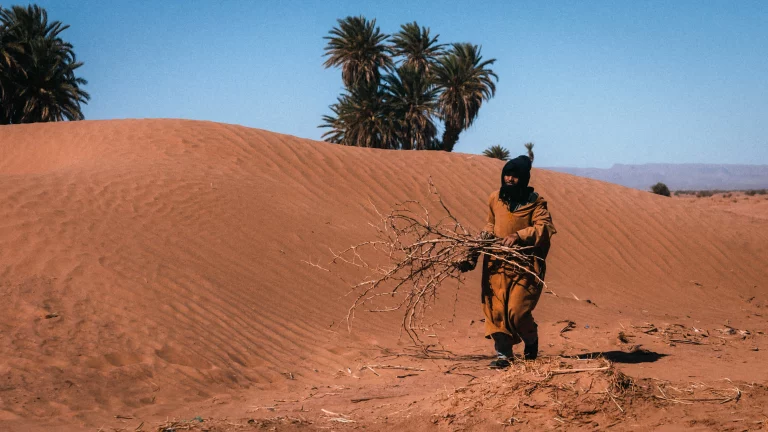
The palms gradually thin as you follow the dry Drâa landscape towards Ras Nkhal. The first stage lets you settle into the guide’s pace and learn how walking on sand differs from a familiar trail. Lunch breaks up the day before the route continues to Sidi Naji. Camp is set up near the dunes, with dinner prepared by the team and the evening free of road travel.
Beyond Sidi Naji, the open spaces widen and stretches of sand demand a steadier rhythm. Your guide chooses the line according to conditions; the support caravan carries what the camp needs. Reaching Erg Zahar brings a different scale to the landscape. If time and weather permit, walk onto a dune to watch the light change, then return to camp for dinner.
Today links the dune landscape with firmer desert plains, following the planned line through Lhdibate and the Etonr area towards Erg Bourabara. The interest lies in the transitions: sand giving way to stony ground, scattered trees breaking the horizon, and a camp that moves with the journey. Local conditions can change the precise lunch and camping spots.
An early start keeps the final stage compatible with the road journey ahead. You follow the return towards Lbour and the Drâa before rejoining M’Hamid and your vehicle. Marrakech and Agadir require a long onward drive, so arrival time must be agreed around the walking stage and road conditions. Avoid booking a flight for the same evening.
5 days / 4 nights
1 fixed-camp night + 3 mobile bivouac nights. Toilets and washing facilities are available only at the fixed camp, not at mobile bivouacs.
Road transfers as agreed; walking with baggage-camel support
You should be comfortable walking on successive days across exposed ground and soft sand. Plan approximately four to six hours on the main stages, with the final stage organised around the transfer. Heat, wind and sand affect effort; there is limited shade between stopping points.
Bring worn-in walking shoes, a small daypack, sun cream, a hat or desert scarf, sunglasses, warm night-time layers and a headtorch. Use a soft main bag for the caravan. We provide all sleeping equipment for solo travellers and couples; a single tent is available without a supplement. Camels carry your main personal luggage, camp and kitchen equipment. Keep water and daily essentials with you.
Sleeping equipment is provided for solo travellers and couples, without a single-tent supplement. You can sleep under the stars when conditions and temperature allow. Toilets and washing facilities are available at the fixed camp when that stop is included in the programme. Mobile bivouacs have no toilets or washing facilities. We explain the planned fixed and mobile nights before booking.
Desert treks operate from mid-September to mid-May. Walking rhythm and camp locations are planned around the route, season and conditions. Choose from different durations and levels; your proposal distinguishes the actual walking days from road-transfer days.
Choose Marrakech, Ouarzazate or Agadir transfers, or ask for a M’Hamid meeting arrangement. The starting city changes the road journey and quotation. An additional night after the trek can make the return less rushed; it is an optional extension.
1–15 travellers. Book a private trek on your own or with your party. Shared departures run with at least two participants; the maximum group size is 15.
Children can join an adapted desert trek from age 2. We plan the route and walking stages with you according to their ages and experience, with camel support for children. Riding allocation is agreed before departure; it does not automatically mean a separate camel for every child.
Pay a 30% deposit or the full amount using the payment link we send. After a deposit, the balance can be paid in cash on arrival. Cancel at least four days before departure for a full refund of all payments made. No refund applies to cancellation less than four days before departure.
Our team has first-aid training and assesses fatigue or injury on the trail. If a return is needed, we arrange a vehicle from a suitable access point. Collection time depends on the position, terrain and conditions. Travel insurance covering the trek and evacuation is recommended.
There are four walking stages, on days two to five. Day one is the arrival transfer, and day five also includes the return drive.
This is a walking trek with a supporting caravan. Camels carry the bags and camp equipment. If you tire during a stage, tell the guide so camel-riding support can be arranged. Children’s camel support is planned with the family; dedicated adult riding for the entire route must be agreed separately.
Sleeping equipment is provided for solo travellers and couples, without a single-tent supplement. You can sleep under the stars when conditions and temperature allow. Toilets and washing facilities are available at the fixed camp when that stop is included in the programme. Mobile bivouacs have no toilets or washing facilities. We explain the planned fixed and mobile nights before booking.
The programme includes a return transfer option, but the last walk and long road journey need an agreed schedule. A following-day flight or an extra night is easier to plan.
Previous desert experience is not essential, but regular walking fitness matters. Describe your experience so the team can assess the route with you.
Request a quote with your starting city, dates and participant number. The team will confirm the current total and any optional extras.
Call us