
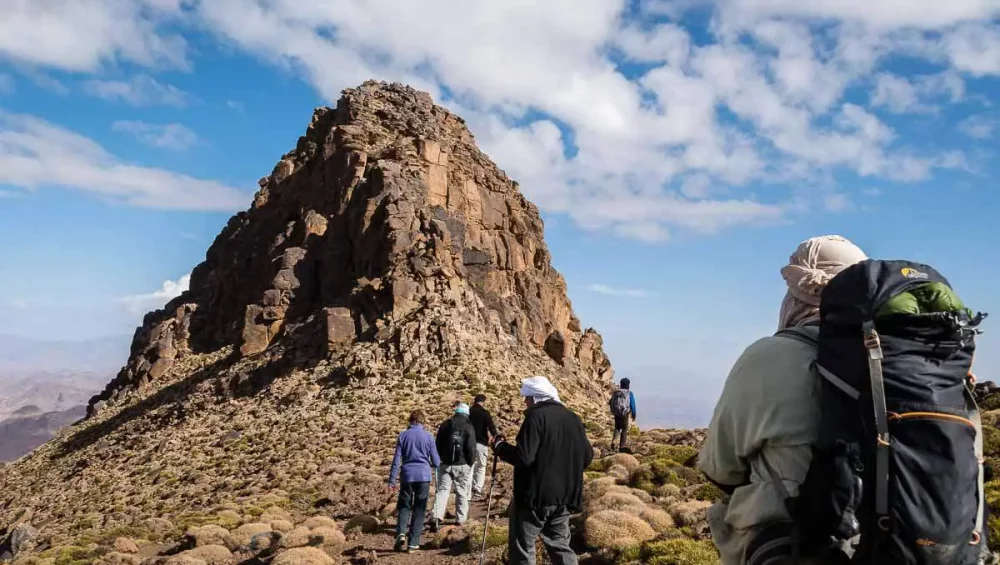
The most useful packing list begins with three questions: where will you sleep, what will the team provide, and what will you carry while walking? Answer those before buying equipment. A supported desert trek, a village-based Atlas journey and a winter mountain ascent are different packing problems.
Five points to plan around
- Check supplied equipment before adding items to your bag.
- Keep the day’s essentials with you, not in transported luggage.
- Match clothing to altitude and overnight conditions.
- Test your footwear and loaded pack in advance.
- Confirm luggage allowances rather than assuming a standard limit.

First check what the booking actually includes
Ask about tents, sleeping equipment, meals and luggage support. A list from a self-supported backpacking trip can make you carry equipment an organised journey already supplies. The opposite mistake is assuming that bedding or bags are provided because another tour included them. Keep a simple record of what is supplied, what you must bring and what is an optional rental. It should refer to your particular route and travel period.
Build the daypack around the stage
When main-bag transport is agreed, keep the things you need before reaching camp in your daypack. Water, useful clothing layers and sun protection should be easy to reach. Follow the team’s arrangements for other essentials and do not place necessary personal items in luggage that may move separately. Pack the evening before and try the bag while walking. Its capacity matters less than whether it fits you and holds the day’s real load comfortably.
Atlas clothing depends on more than the forecast in Marrakech
A warm valley does not describe conditions on a pass or at the overnight stop. Plan adjustable layers and appropriate protection from wind and expected precipitation. Discuss sleeping requirements for the actual accommodation rather than treating every guesthouse or refuge as identical. Winter or snow-covered summit terrain requires a specific equipment and preparation discussion; this general walking guide is not a complete winter mountaineering kit list.
Sahara packing includes the hours after walking
For M’Hamid routes, think about sun and dust as well as evening and sleeping comfort. The season influences what warm clothing and sleep equipment are appropriate. Consider covering clothing, a suitable hat, sunglasses and sun protection. Keep electronics protected from sand. Ask how drinking water is organised and what you need to carry on each stage: a single quantity copied from an unrelated hike is not a sensible substitute for that conversation.
Use footwear you understand
Choose according to fit, terrain and the programme’s requirements. Wear the intended socks and shoes on several walks beforehand, including descents where relevant. New footwear is not automatically more comfortable than a familiar pair. Light camp footwear may be useful at overnight stops, but it does not replace walking shoes on every surface. If you plan to use poles, practise with them rather than unpacking them for the first time on a demanding stage.
Reduce duplication before chasing ultralight kit
Lay everything out and separate necessary items, supplied items and optional comforts. Removing duplicates can save more space than buying expensive replacements. Keep an evening change proportionate to the trip and use simple bags to organise clean, damp and dusty items. Lightweight packing should not mean leaving out equipment required for the conditions. Try the complete load, not just the empty backpack, before deciding it is comfortable.
Finish with a route-specific check
Confirm the main-bag type and allowance, charging opportunities and any agreed rentals. A vehicle transfer and animal luggage support may require different bags. Keep personal documents and medication needs organised, seeking professional advice where appropriate. Then review the itinerary night by night: this is often where missing assumptions about bedding, electricity or facilities become clear. The aim is a workable kit for your trip, not a perfectly compressed bag in a photograph.
Questions before booking
Do I need to bring my own tent?
Only if the programme requires it. Ask what shelter is supplied for each night rather than applying a self-supported camping list to every guided trek.
Is a sleeping bag liner enough?
That depends on conditions and the actual bedding provided. Get a recommendation for your route and season instead of assuming a liner replaces a sleeping bag.
What is the ideal daypack size?
It must fit your required water, layers and personal essentials comfortably. The right capacity varies with the stage and arrangements.
Can my main luggage be a suitcase?
Check where it will travel or be stored. A suitcase suitable for a road transfer may be unsuitable for animal-supported stages.
Do all Morocco treks use the same weight limit?
No. Confirm the allowance in your booking. Another operator’s figure does not establish the limit for your trip.
Should I buy all new equipment?
Usually the first task is checking what you already have. Prioritise suitability and testing over buying items simply because they are labelled ultralight.
Plan the walking journey
Explore a relevant itinerary · Discuss your plans