
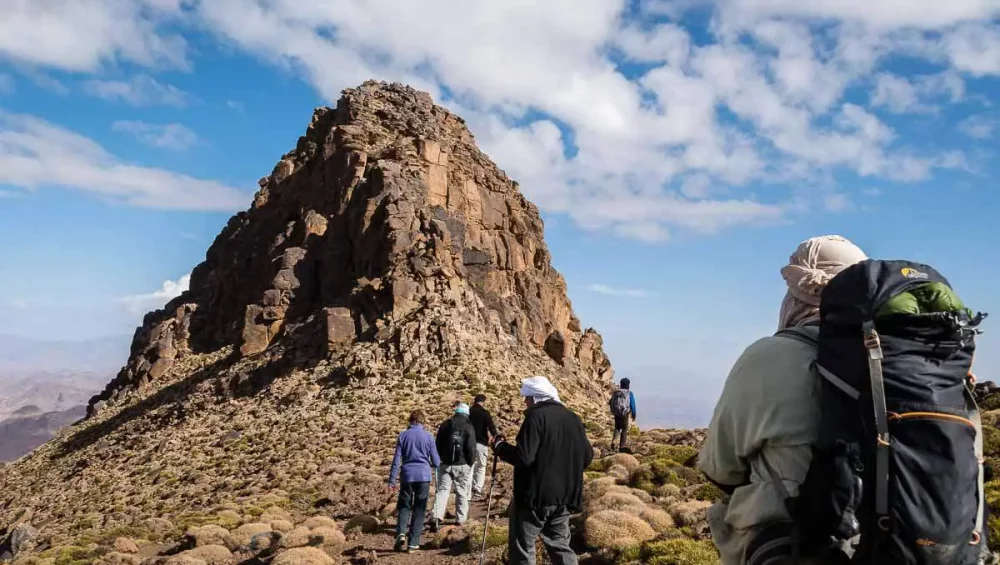
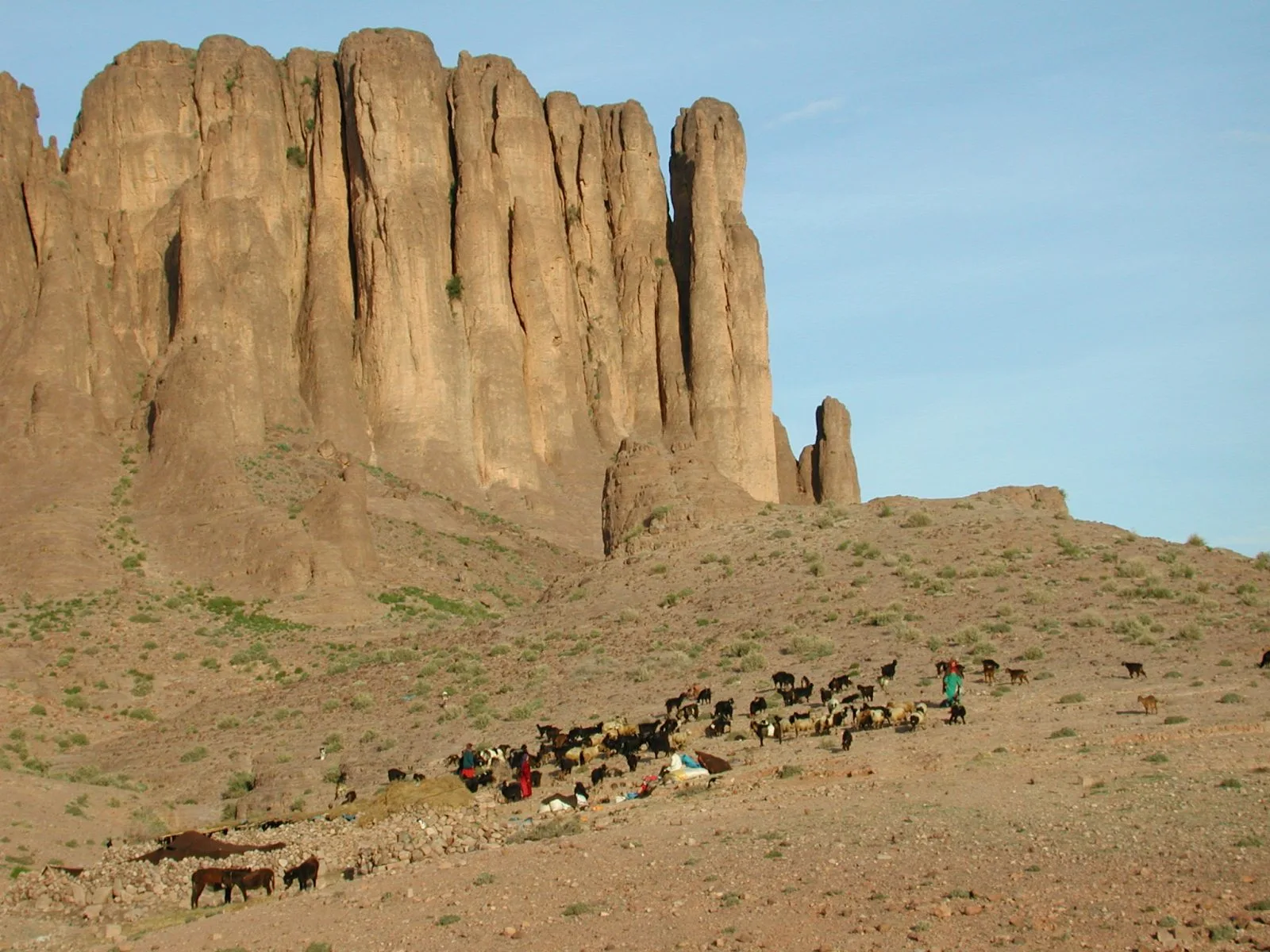
The useful question for a Saghro photography trip is not simply where to watch sunset. It is whether the walking plan leaves you enough time to notice the landscape. A well-paced stage can offer rock towers, small paths and changes in scale throughout the day, without depending on a single evening viewpoint.
Five planning points
- Discuss photographic stops before booking the route.
- Keep sunset viewpoints within a sensible return distance.
- Look for texture and scale when the light is harsh.
- Carry camera equipment you can comfortably walk with.
- Ask permission before photographing people.

Start with the landscape you actually want
Jbel Saghro is rocky mountain country in southern Morocco. It offers a different visual story from Toubkal’s high slopes or a walking caravan in the dunes around M’Hamid. Decide whether you want wide landscapes, details of rock and vegetation, or a walking journey that includes village life. That choice helps determine the route and pace. A trek photographer does not need every famous viewpoint: a clear sequence of landscapes often tells a stronger story than an ambitious checklist.
A walking itinerary is a timetable for light
Tell the operator that photography matters to you. Ask how long the stages take, where you sleep and whether useful viewpoints are close to camp. The last light may be attractive, but getting there and back must work for the terrain and the group. A longer trek does not automatically mean more photography time if every day is packed. Cloud, dust and the shape of the valley also affect the scene, so avoid treating a colourful sunset as a promised feature of the trip.
Work with midday rather than waiting it out
When distant slopes look flat in strong sun, look nearer. Paths, stone textures and the boundary between cultivated ground and bare hills can make useful subjects. A walker in the frame can show scale, provided they are happy to be photographed. Put the camera away occasionally, too. Observing how the scene changes as you move will help you choose the next frame more effectively than taking the same wide shot at every bend.
Pack for repeated access, not maximum equipment
The best camera for this walk is one you can carry and use without constantly stopping the group. A small bag, dust protection, a clean cloth and charged spare batteries are practical priorities. Keep your hands available on uneven sections. A phone may be enough; a heavy tripod is useful only if you are comfortable carrying it for the planned stages. Confirm charging arrangements for each overnight stop instead of assuming a tented camp has mains electricity.
People are participants, not scenery
Ask before taking an identifiable portrait. Allow the conversation to happen without an immediate request for a picture, and accept a refusal. Do not enter a home, cross a working field or obstruct animals for a better angle. Photographing a trek responsibly also means avoiding damage to vegetation and staying with the agreed walking route. These small decisions affect how the group is received and whether the encounter feels comfortable for everyone.
Turn the idea into a workable booking
Use a published Saghro itinerary as the starting point, then explain your priorities. Our six-day Jbel Saghro trek gives a route to discuss, rather than a guarantee of photography conditions. Share your walking experience, camera load and the amount of time you would like for stops. If you also want Sahara dunes, ask about a separate desert section: mountain scenery and dune trekking are distinct experiences and need enough time between them.
Questions before you go
Is Saghro the same as a Sahara dune trek?
No. Saghro is a rocky mountain landscape. M’Hamid-based itineraries are the relevant starting point for a walking trip through dunes.
Can I join with just a phone?
Yes. Choose equipment you can comfortably protect and use while walking. An elaborate camera system is not a requirement.
Will there be a sunset shoot every evening?
Not necessarily. Conditions, camp location and the day’s walking determine what is realistic. Discuss this before booking.
Should I bring a tripod?
Only if its use justifies its weight for you. Confirm the walking distances and luggage arrangements before deciding.
Can I photograph local families?
Ask their permission first. Do not assume that joining a guided trek includes consent to portraits or visits inside homes.
What should I send with my enquiry?
Your dates, group size, walking experience, equipment load and whether photography or covering distance is your main priority.