
Planning a Morocco Desert Yoga Retreat: The Questions Worth Asking Before You Book
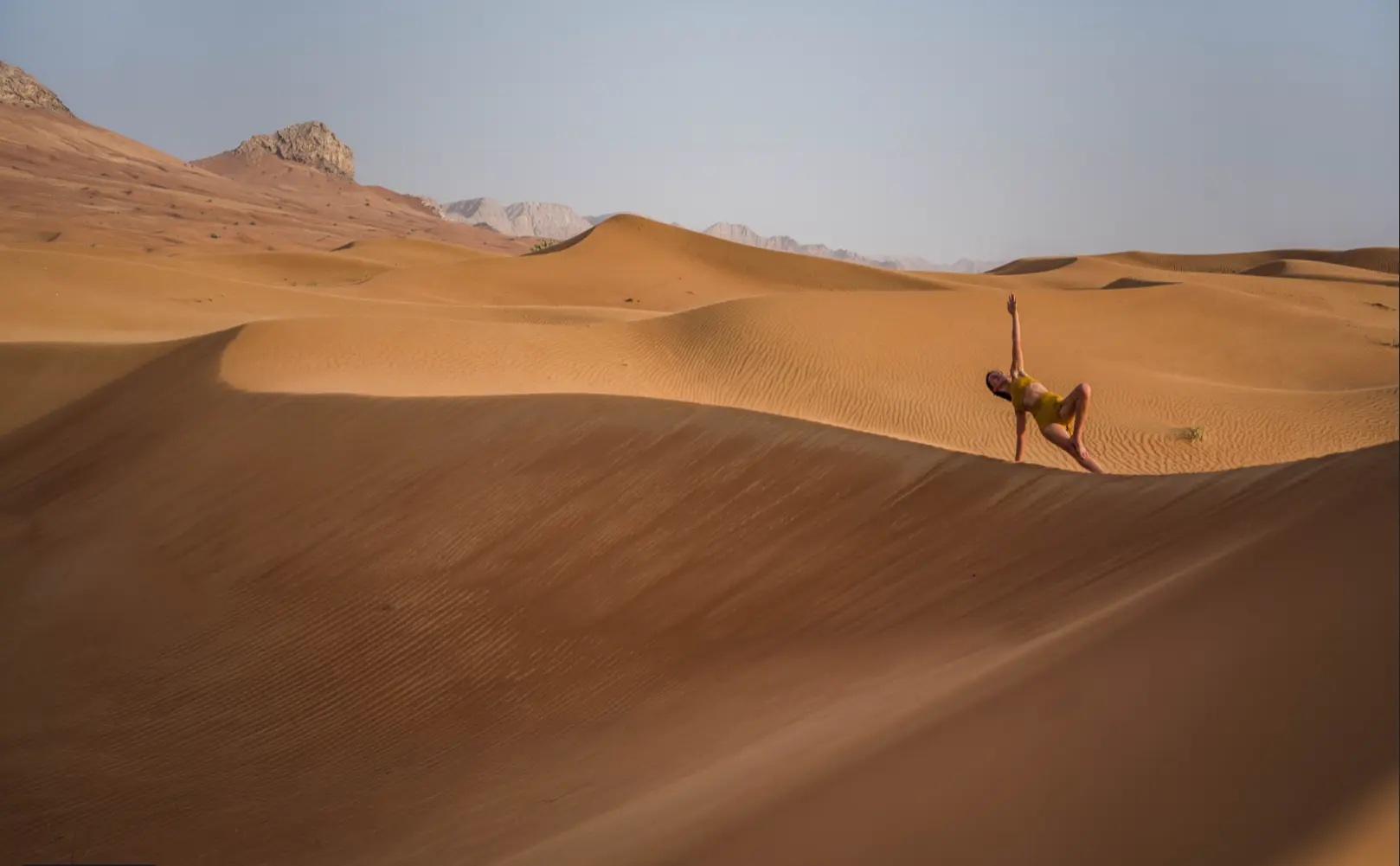
A Morocco desert yoga retreat can combine camel-supported walking and mobile bivouacs or stay based at one camp. Choose your pace first, then confirm teaching arrangements, camp facilities, transfers and the equipment included.
- M’Hamid is a starting point for different routes, not one single dune camp.
- A slower walking route can make room for daily yoga and rest.
- Mobile desert bivouacs do not offer built-in bathrooms or showers.
- The yoga teacher and local trekking team perform different roles.
- Confirm the instructor, sleeping kit, yoga equipment and logistics before booking.
The first surprise about a yoga retreat in the Moroccan Sahara is that the desert does not begin with a spectacular dune. It begins with a journey south. The mountains rise beyond Marrakech, the road passes through Ouarzazate and the palm-lined Drâa Valley, and the settlements gradually give way to more open country. By the time you reach M’Hamid El Ghizlane, you have already experienced a considerable change of landscape and pace.
That journey matters. A desert yoga retreat is part travel experience, part outdoor practice, and part logistical project. It can involve several nights moving with a camel-supported trekking team, or it can be based at one camp with shorter walks and more time for workshops. The result should feel unhurried, but the planning behind it needs to be precise.
If you are considering a Sahara retreat from the UK, North America or elsewhere, this guide explains the decisions that make the greatest difference: where you will actually stay, who will teach, how much you will walk, what facilities to expect, and how to make the days work for your group.
Start by asking where in the Sahara your retreat will take place
“Morocco desert retreat” is a broad description. Some programmes take place near Marrakech in the rocky Agafay landscape. Others are based in the dunes around Merzouga. Trek Desert Maroc’s Sahara programmes centre on the M’Hamid area in southern Morocco, beyond Zagora at the end of the paved route along the lower Drâa Valley.
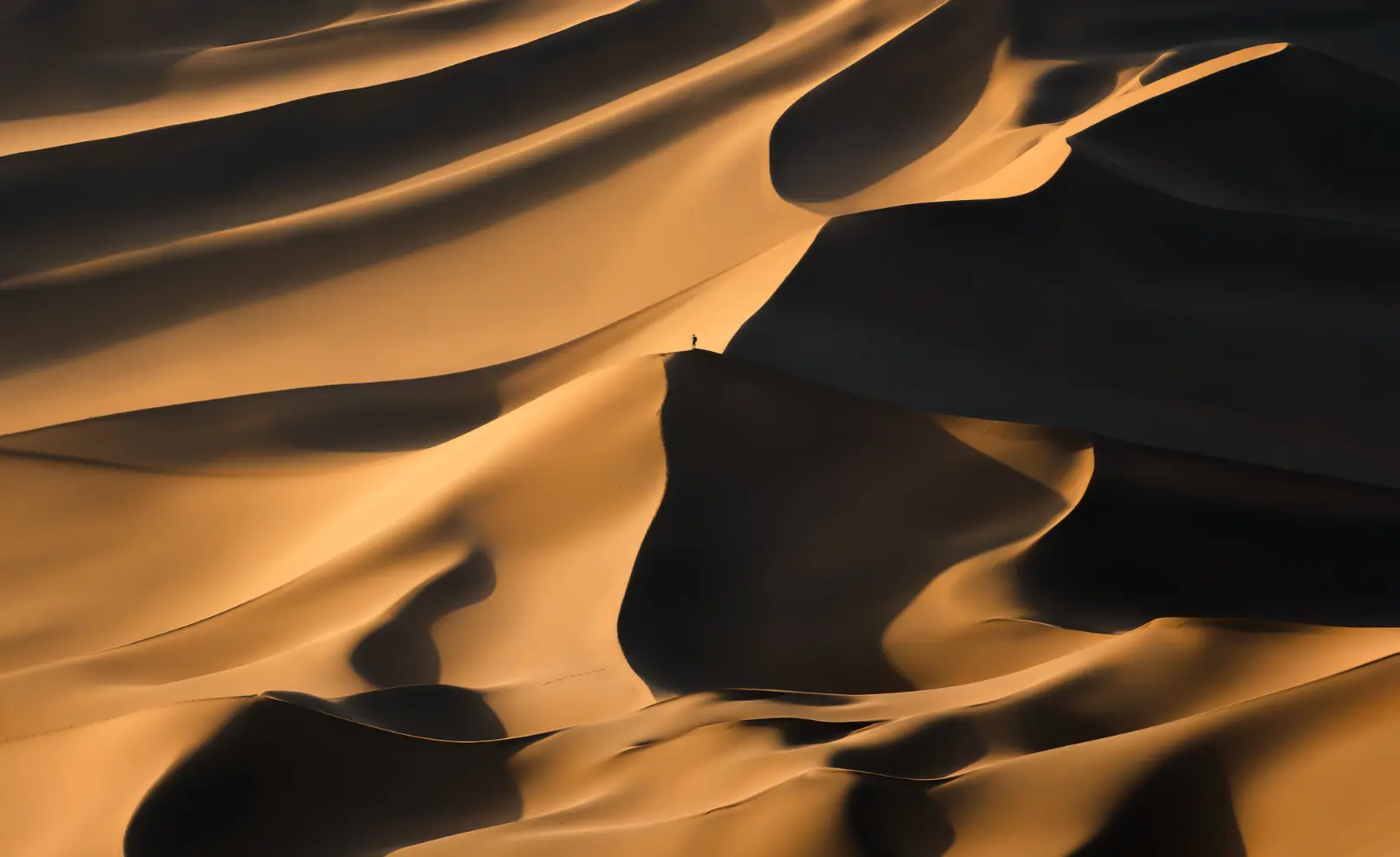
M’Hamid is a departure point, not the name of one remote campsite. From the village, different trails lead across firm desert plains, sections of sand, tamarisk country and dune fields. Erg Zahar, Erg Smar and Erg Chigaga are distinct destinations; a short retreat cannot reasonably claim to cover all of them at a gentle walking pace. Reaching the more distant Chigaga area involves its own route and off-road arrangements.
When researching a retreat, look beyond photographs. Ask for the departure village, approximate route, camp location and number of days in the desert itself. A beautiful picture of dunes may be genuine, but it does not establish where a particular group will spend its nights.
Retreat first, trek first, or a balance of both?
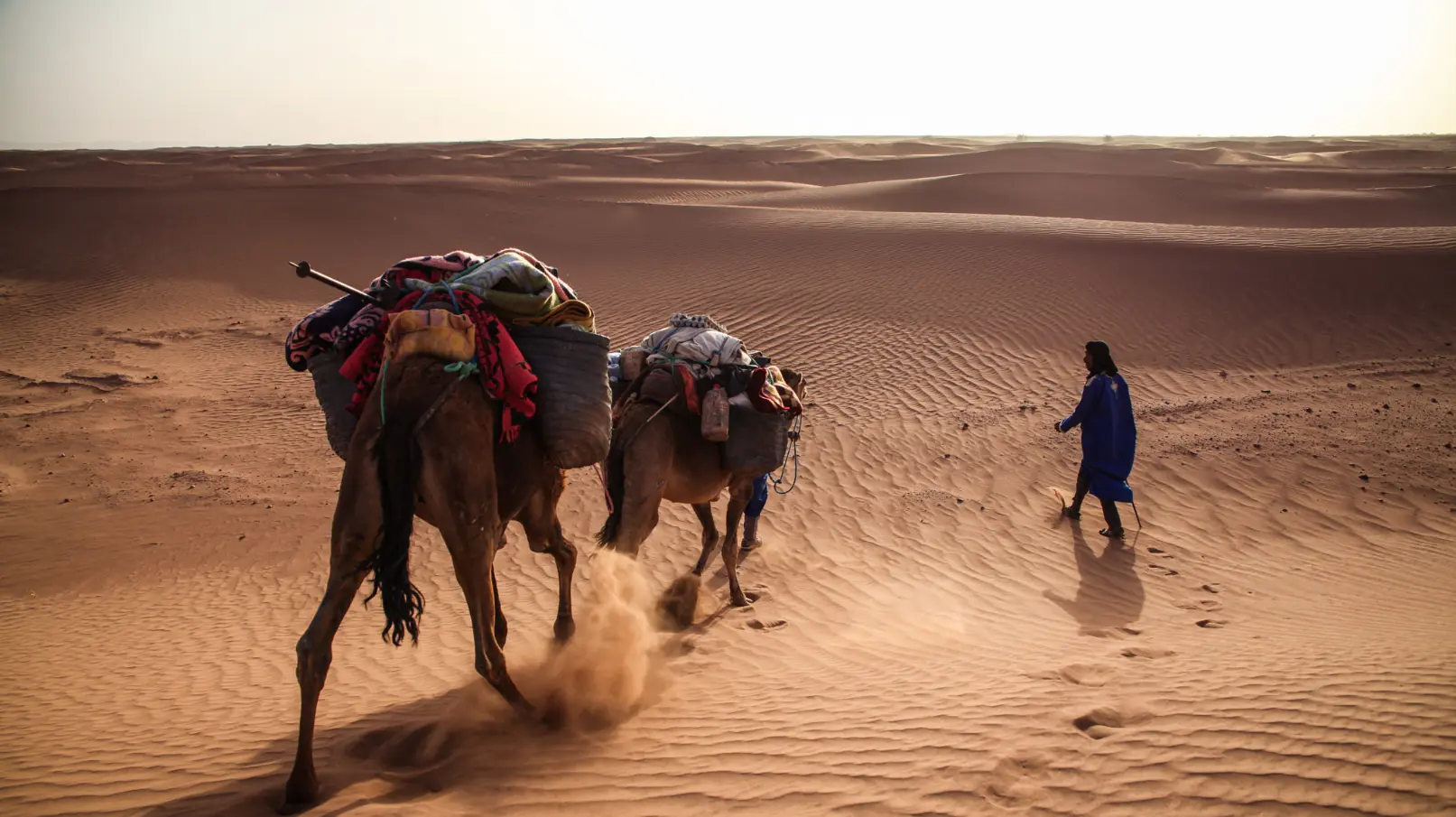
This is the most important decision because it shapes everything else. A walking-focused retreat may involve moving camps and several hours on foot each day. Participants walk with a local guide while the support team transports the main bags, kitchen supplies and bivouac equipment by dromedary where the route provides for it. A yoga session then fits around the walking, food preparation and arrival at camp.
A practice-focused retreat stays at one base. Short desert walks may be included, but the daily schedule has more room for longer classes, discussions, meditation and downtime. This can work particularly well for a teacher who needs a reliable block of time for a workshop.
The two formats are not interchangeable. On a travelling retreat you experience the satisfaction of making progress through changing landscapes; you also need to be comfortable with packing up, walking and sleeping in a mobile bivouac. Staying in one place reduces daily movement, but it does not necessarily mean luxurious amenities. The nature of that particular camp still needs to be agreed.
A useful question is: if the group had to choose between reaching a distant dune field and having an extra two hours of practice, which would matter more? The answer usually tells you what sort of programme to build.
Choose the season around the activity, not only the airfare
October and November are generally attractive months for active desert travel after the fiercest summer temperatures have eased. March and April can also provide good conditions for combining walking and outdoor yoga. Weather is variable, however, and spring winds can affect an exposed practice area.
Winter is an option, especially for people who enjoy walking in cooler daytime conditions, but the desert loses heat quickly after sunset. A yoga session that involves sitting still before breakfast can feel considerably colder than a walk at midday. Warm layers and suitable bedding are important.
In summer, strong heat makes extended exposed walking and long outdoor classes difficult. Rather than advertising the desert as equally comfortable year-round, a responsible organiser should discuss dates, activity levels and adjustments for weather.
Even in a favourable month, do not insist on a sunrise session at a particular dune if the ground is windy or unstable. The instructor and local team need room to choose a protected place instead. Sensible flexibility is one of the practical benefits of an experienced retreat team.
A realistic day: not every hour needs a spiritual label
Picture an ordinary morning on a spring retreat. Someone is already awake, putting on a fleece. Others emerge slowly from their tents. The cook and camp team are preparing the morning while the yoga teacher looks for an appropriate space. Perhaps the class begins with simple mobility and breathing, perhaps with a gentle flow. The location is chosen for level ground and room to practise, rather than for the most dramatic photograph.

Breakfast follows. If this is a travelling retreat, participants prepare their daypacks while the support team handles the main luggage and camp equipment. A guide leads the walk across varying ground. Soft sand changes the effort; a stony flat changes the footing. There may be a stop near tamarisk trees for food and shade before the group continues or settles into camp.
Later, the teacher might offer restorative movement, quiet reflection or no formal session at all. A demanding walking day deserves recovery. Dinner brings people together and the evening may be as simple as conversation under the night sky. The most memorable part is often a small, unplanned moment rather than an activity printed in a brochure.
This is an illustrative day, not a guaranteed timetable. The length of each walk, the type of yoga, meal arrangements and even the number of sessions belong in the specific retreat proposal.
Is a desert yoga retreat suitable for beginners?
Yoga experience and walking ability are different things. Someone new to yoga may be a confident hiker; an experienced practitioner may have never walked through loose sand for several hours. It is worth assessing both honestly.
A beginner-friendly arrangement can include gentler walking stages and adaptable classes. Trek Desert Maroc’s softer itineraries can be planned around roughly two to four hours of walking, while more demanding routes are longer. These are not standard daily distances for every retreat. The actual programme should state the approximate walking time, terrain, rest breaks and amount of luggage you carry yourself.
Ask who leads the yoga and in which language. Hatha, Yin, Vinyasa and restorative practices may be relevant to different retreats, but that does not mean all four are taught on one departure. A group bringing its own teacher can design a more specific learning focus; a guest-teacher retreat must identify the instructor and class style before participants commit.
If you have mobility limitations, an injury or a health concern that affects exercise, discuss suitable adaptations with the teacher and your clinician as appropriate. An outdoor retreat should not promise that any level of exertion will suit absolutely everyone.
What does sleeping in a desert bivouac really mean?
Camp descriptions deserve more scrutiny than mood photographs. A travelling bivouac is a practical overnight arrangement, not a conventional hotel. Participants should expect simple sleeping conditions and the realities of dust, uneven ground and a changing night-time temperature. Trek Desert Maroc’s mobile bivouacs do not have installed showers or toilets. Where fixed camps form part of the programme, the available washing and sanitation arrangements must be specified.

A stay based at one location may have additional amenities, but it may still be a simple wilderness camp. Ask exactly what is provided: tent sharing, bedding, mattresses, blankets, sleeping bags, private facilities if any, and the availability of electricity. Never infer these from the words “comfortable”, “nomadic” or “exclusive”.
The same principle applies to the practice space. Yoga mats, blocks, bolsters and a sheltered area are not automatic inclusions. A soft sand surface is not always ideal for balancing postures; a flatter, firmer area may be preferable. For a large group, the ground needs to accommodate everyone safely and without overcrowding.
Good information does not spoil the adventure. It allows travellers to appreciate the simplicity because they chose it knowingly.
Packing for both walking and yoga
Think in two bags. Your main bag holds spare clothing, personal toiletries and overnight items. On a supported trek it may travel with the caravan, while you keep a small daypack containing drinking water, sun protection, a warm or windproof layer and anything needed between stops. Confirm luggage limits and the exact portage arrangement before setting out.
Choose breathable, reasonably covering clothes for the daytime, comfortable walking shoes you have already tested, a hat, sunglasses and sunscreen. A scarf is useful when the wind carries dust. Bring warm clothing for early mornings and nights even if the forecast looks mild. A head torch is particularly practical around camp, and a power bank may be useful where charging is limited.
For yoga, ask whether you need to bring your own mat. Consider how you would carry it, whether it can be kept clean in sandy conditions, and whether the class needs any special props. Teachers bringing groups should confirm the number and type of mats available in writing, not assume the camp has enough.
For more detailed packing advice, read our Morocco desert trek packing list.
From Marrakech to M’Hamid: allow time for the journey
M’Hamid is a substantial drive from Marrakech, not an easy half-day outing. The familiar overland route crosses the High Atlas, continues towards Ouarzazate, follows the Drâa corridor through Agdz and Zagora, and finally reaches M’Hamid. Driving conditions, stops and the departure point determine the length of the day; around seven to nine hours is a reasonable broad planning indication, not a guaranteed transfer time.
This has an immediate effect on how you evaluate a retreat. If you buy a five-day package departing from and returning to Marrakech, find out how many of those days involve the drive. If your real aim is three full days of practice, make sure the timetable offers them. Some groups prefer to break the journey with an overnight stop.
Programmes may also be arranged with departures from Ouarzazate or Agadir. Confirm the meeting point, transfer type and any hotel nights before buying flights. Travel documents and entry conditions depend on your passport nationality; consult official advice close to departure. Consider insurance that covers the actual outdoor itinerary and assistance arrangements.
Food, water and healthful expectations
Meals are part of the desert rhythm, but they should not be reduced to decorative phrases about “traditional cuisine”. Find out which meals are included, when they are served and how the kitchen supports the effort involved in walking. Vegetarian meals or other dietary requirements should be requested before the trip so the cook can plan supplies. Allergies need clear advance communication.

Ask whether drinking water is supplied throughout each day and how participants refill their bottles. Clarify arrangements for handwashing, personal hygiene and carrying out waste. There should also be a plan for wind, unexpected fatigue or a participant needing to slow down. A guide’s knowledge of the terrain and access points is a practical part of the retreat, not just a cultural addition.
Respect the surroundings as a place where people live and work. Do not photograph residents without permission, leave litter or assume that a quiet village path is a private retreat venue. The local team can help the group make considerate choices.
For yoga teachers: organise the ground before advertising the programme
Teachers planning to bring their own students should begin with their teaching plan. How many participants will there be? How much time is needed for daily sessions? Is a sheltered practice area important? Will there be optional silence, workshops, journaling, or separate small-group activities? How comfortable is the group with walking and simple camp life?
The yoga teacher is responsible for the teaching content and participant-level adaptations. The local operator handles the route, guiding, camp operations, meals, transfers and luggage support as agreed. These roles should reinforce one another. It is difficult to run a meaningful two-hour workshop if the walking programme leaves only thirty minutes before dinner.
Ask for a proposal that distinguishes days on the road from days in the desert, lists all sleeping locations, identifies the yoga instructor, explains equipment availability and shows what is included in the price. It should also cover contingency plans for weather, dietary requirements and basic privacy needs for group exercises.
A tailored retreat is not one with the most promises. It is one in which the timetable, physical effort and available facilities make the teaching plan genuinely possible.
How to compare retreat prices without surprises
Two similarly priced programmes may include very different services. Compare the number of nights in the desert, any Marrakech accommodation, private or shared transfers, meals, drinking water, guides, camel support, yoga instruction, equipment and return journey.
Check whether flights, insurance, personal expenses and pre- or post-retreat accommodation are separate. Understand payment conditions and cancellation terms before paying a deposit. If a departure is described as a group retreat, verify that the dates, instructor and available places are actually confirmed; a custom private proposal should be presented as such.
There is no honest universal price for every yoga retreat from M’Hamid. The group size, teaching arrangements, route and sleeping facilities change the calculation. A clear quote is more useful than an attractive number with important details missing.
Questions travellers often ask
Can I travel alone?
Will there be two yoga sessions every day?
Do we ride the camels?
Can the retreat visit both the Sahara and the Atlas?
Is this a luxury wellness holiday?
Begin with the experience you actually want
A good Morocco desert yoga retreat is built from a few honest choices: the amount of walking, the time available to practise, the way you want to sleep and the company you want to travel with. When those are clear, the dunes become a setting for the journey instead of a checklist of attractions.
Trek Desert Maroc works with local desert teams around M’Hamid to plan yoga and walking programmes for groups and organisers. Tell us your preferred dates, group size, walking level and teaching arrangements. We can discuss a route and camp setup that fit those needs rather than forcing your plans into a standard itinerary.
Contact Trek Desert Maroc to begin planning your Sahara retreat. The first question is not how many dunes you can see. It is what kind of days you want to spend among them.